

Speaking on The Resilience Equation panel at the Invest: Miami 11th Edition Leadership Summit on September 10, 2026, INGAGE Chief Operating Officer of Public Affairs and Governmental Relations Alexi Haas said Miami's long-term resilience depends on three commitments: upgrading infrastructure, prioritizing housing density along transit corridors to address affordability and retain talent, and ensuring new projects create opportunity for all residents.
Miami has proven it can attract capital. The harder question, and the one that decides whether this decade of growth lasts, is whether the region can build the systems that let that capital stay. That was the challenge Alexi Haas put to the room at the Invest: Miami 11th Edition Leadership Summit, hosted by Capital Analytics Associates (caa) at the Chapman Conference Center at Miami Dade College.
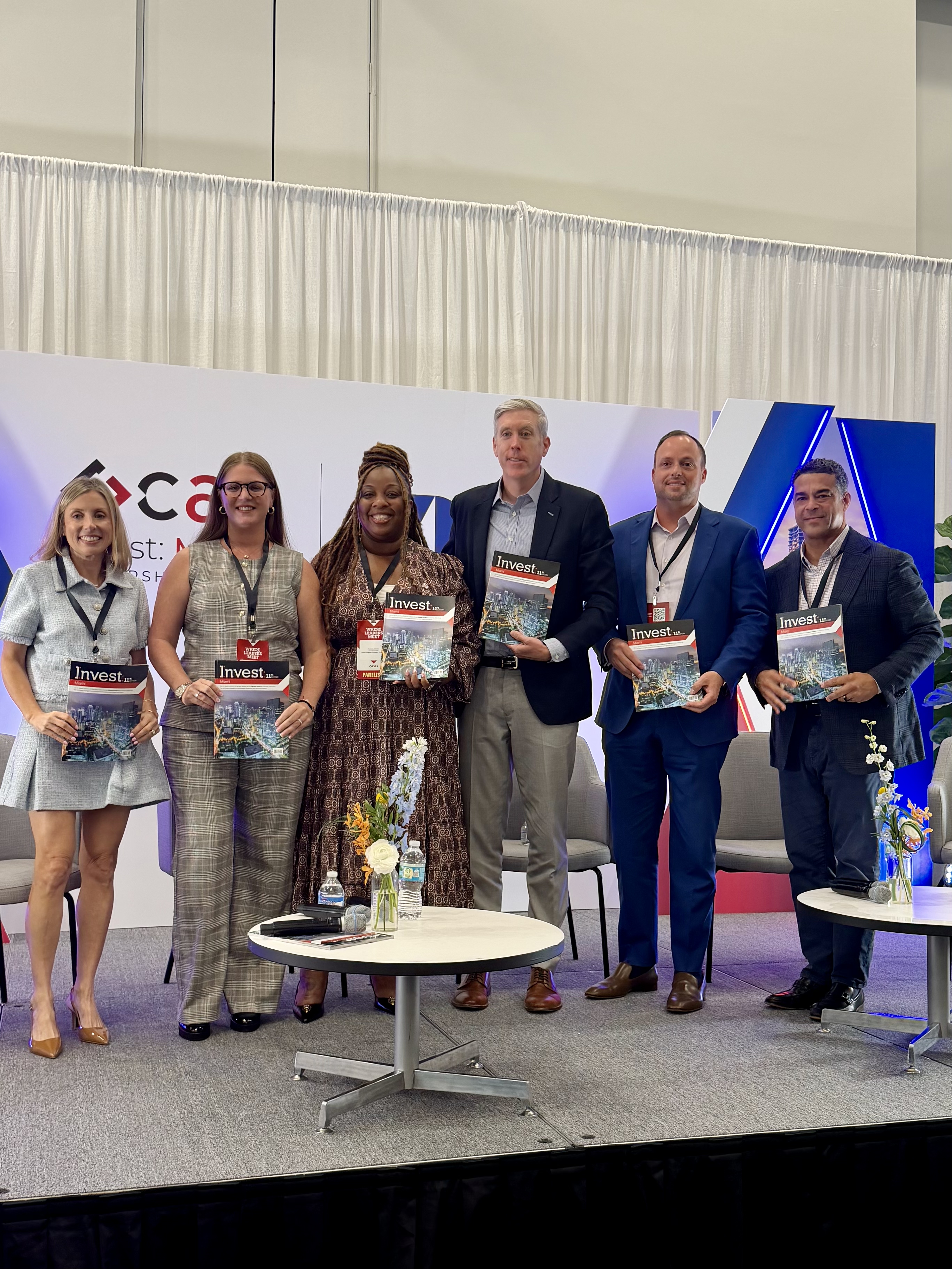
Haas joined the afternoon panel, The Resilience Equation: Balancing Opportunity, Investment, and Sustainability as Miami Evolves, moderated by Lauren Deutch, Partner at Nelson Mullins Riley & Scarborough LLP. She was joined by J.C. de Ona, Division President, Southeast Florida, at Centennial Bank; Makeda Johnson, President and CEO of the Urban League of Greater Miami, Inc.; John Newell, Chief Executive Officer of World Insurance Associates LLC; and David Ramos, President of Hotwire Communications.
The panel was asked to examine how Miami can translate record investment across real estate, infrastructure, technology, and finance into lasting economic capacity. Haas focused her remarks on three commitments the region cannot defer.
Why Is Infrastructure the Foundation of Miami's Resilience?
Infrastructure determines whether Miami's growth is durable, because every project depends on roads, drainage, utilities, and connectivity that must exist before residents arrive. Haas's first point was direct: no amount of new development makes a city resilient if the infrastructure beneath it cannot keep pace. Roads, drainage, water and sewer capacity, power, and connectivity are not background conditions. They determine whether a project can be entitled, financed, insured, and occupied.
For developers and investors, this is a practical matter. Infrastructure capacity shapes approval timelines, impact fees, concurrency requirements, and the political appetite of local governments to say yes. For residents, it shapes whether daily life works. Haas argued that Miami must treat infrastructure improvements as a first-order economic development strategy, not a downstream cost of growth, and that the private sector has a role in advocating for and co-investing in that work.
How Does Density Along Transit Corridors Address Miami's Affordability Crisis?
Concentrating housing density along Miami's rail and bus rapid transit corridors puts new supply where infrastructure already exists and lowers the combined cost of housing and transportation for the people who work in the city. Haas's second point connected the region's two most pressing economic risks: the cost of housing and the loss of the workforce that cost is pushing out.
Miami's affordability problem is a supply problem, and where that supply lands matters as much as how much of it gets built. Haas made the case that the region should prioritize dense, mixed-income housing along its transit corridors. Transit-adjacent density delivers more units per acre of scarce land, gives residents a way to reach jobs without owning a car, and relieves pressure on roads that are already at capacity. A household that can drop a car payment, insurance, and parking has materially more room in its budget, even when rent stays the same.
Haas framed this as a talent retention strategy, not only a housing strategy. Miami is competing for teachers, nurses, first responders, hospitality workers, and early-career professionals in every sector the summit celebrated. When those workers cannot afford to live within a reasonable commute of their jobs, they leave, and the employers who depend on them follow. A region that wants to keep the talent it has attracted has to build housing where that talent can afford to live and get to work. Density along transit is the most direct way to do both.
How Do New Developments Create Opportunity for All in Miami?
New projects create opportunity when they include workforce housing, local hiring, and community engagement that starts before the site plan is filed. Haas's third point addressed who benefits when Miami grows. Resilience, she argued, is not only structural. A city where new investment displaces the people who work in it is not resilient; it is fragile in a way that eventually shows up in labor shortages, political opposition, and stalled approvals.
Haas called on developers and their partners to design projects that create opportunity for the communities around them: workforce housing alongside market-rate units, local hiring and contracting, and community engagement that begins before a site plan is filed rather than after opposition forms. In her experience leading public affairs and governmental relations for land deals across the United States, projects that are built with the community, not just near it, move faster and last longer.
What Does This Mean for Investors and Developers in Miami?
Haas's three points function as a due diligence checklist for anyone evaluating a South Florida project: infrastructure capacity, proximity to transit, and community positioning. The Resilience Equation panel reflected a broader shift in how Miami's business leadership talks about growth. The conversation is no longer about whether capital will come. It is about whether the region has the infrastructure, housing, and community trust to absorb it.
For developers, lenders, and institutional investors evaluating South Florida, the questions are concrete. Does the site have the infrastructure capacity to support the program? Is it positioned along a transit corridor where density is both feasible and politically supportable? Has the project been designed to earn community support before it needs it? The answers increasingly determine whether a deal closes on schedule or spends years in a public process.
Frequently Asked Questions
Who spoke on the resilience panel at Invest: Miami 2026?
The Resilience Equation panel on September 10, 2026, was moderated by Lauren Deutch of Nelson Mullins Riley & Scarborough LLP and featured Alexi Haas of INGAGE, J.C. de Ona of Centennial Bank, Makeda Johnson of the Urban League of Greater Miami, John Newell of World Insurance Associates, and David Ramos of Hotwire Communications.
What did Alexi Haas say about Miami resilience?
Alexi Haas said Miami must prioritize infrastructure improvements, concentrate housing density along transit corridors to address affordability and retain talent, and ensure new development creates opportunity for all residents rather than displacing the workforce the city depends on.
How does density along transit corridors improve housing affordability?
Building more housing near rail and bus rapid transit adds supply on land where infrastructure already exists and lets residents reduce or eliminate car ownership, lowering their combined housing and transportation costs. It also concentrates growth where roads and utilities can absorb it.
Why does housing affordability matter for talent retention in Miami?
When teachers, nurses, first responders, and early-career professionals cannot afford to live within a reasonable commute of their jobs, they leave the region and employers struggle to fill roles. Affordable housing near transit is how Miami keeps the workforce its growth depends on.
Who is Alexi Haas?
Alexi Haas is Chief Operating Officer of Public Affairs and Governmental Relations at INGAGE, an integrated firm headquartered in Miami that provides marketing, growth consulting, land deal management, and crisis communications to organizations across the United States.
What is Invest: Miami?
Invest: Miami is an annual business intelligence report and leadership summit produced by Capital Analytics Associates (caa). The 11th Edition Leadership Summit was held September 10, 2026, at the Chapman Conference Center at Miami Dade College.
About INGAGE
INGAGE is an integrated firm founded in 2011 that helps organizations across the United States grow, endure, and be heard. Headquartered in Miami with offices in Tampa and Atlanta, INGAGE pairs senior practitioners across marketing, growth consulting, land deal management, and crisis communications with one point of accountability per engagement. Our land deal management practice guides developers through due diligence, entitlements, approvals, public affairs, and government relations on complex projects.
To discuss how INGAGE can support your next project in Miami or across the United States, contact our team.
Event details courtesy of Capital Analytics Associates and Nelson Mullins Riley & Scarborough LLP event listings.